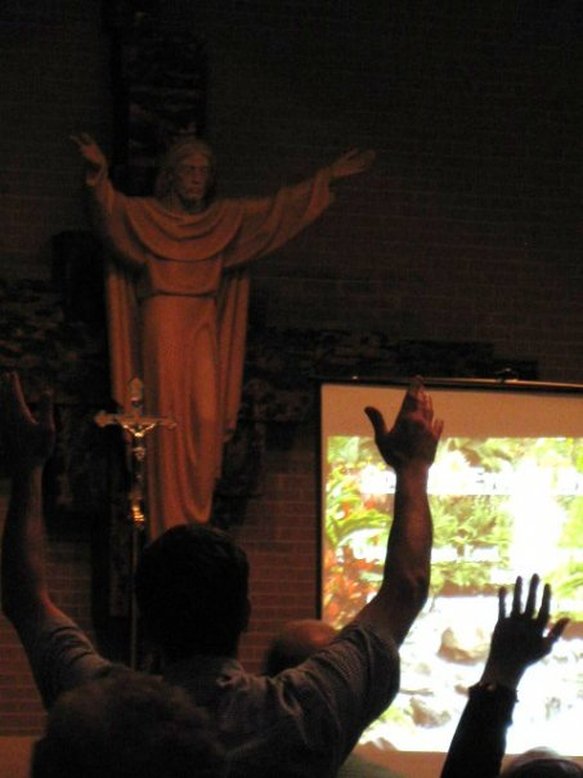
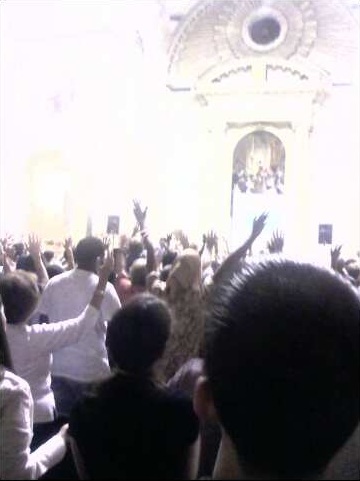
 Praise during Eucharistic Adoration at a healing service on July 9, 2011 in Washington DC
Praise is a natural response to God. As we grow closer with God, getting to know and experience Him, ordinary moments can become special occasions for grace. We can see God's love for us revealed in His creation. St. Alphonsus Liguori described this in the life of St. Mary Magdalene of Pazzi, "when she held any beautiful flower in her hand, was enkindled by the sight of it with love to God; and she would say: 'And God, then, has thought from all eternity of creating this flower for love of me!' Thus did that flower become, as it were, a dart of love, which sweetly wounded her, and united her more and more to her God."
Our personal experience of God's love changes us. Even our view of the world changes and we can see it filled with God's presence which in turn makes us thankful. This is the proper attitude of creatures to their loving Creator. As the priest says during the Mass, "Let us give thanks to the Lord our God," the people respond, "It is right and just." Often charismatic gatherings spend time singing songs of praise.
St. John of the Cross explains that living in close union with God, which the Holy Spirit leads us to, "a soul always walks in festivity, inwardly and outwardly, and it frequently bears on its spiritual tongue a new song of great jubilation in God, a song always new, enfolded in a gladness and love arising from the knowledge that the soul has of its happy state." He also teaches that a life of joy and praise is normative for souls in close union with God, saying, "there is no need to be amazed that the soul so frequently walks amid this joy, jubilance, fruition, and praise of God." (St. John of the Cross, The Living Flame of Love, stanza 2, paragraph 36).
The Second Vatican Council taught, "The holy people of God shares also in Christ's prophetic office; it spreads abroad a living witness to Him, especially by means of a life of faith and charity and by offering to God a sacrifice of praise, the tribute of lips which give praise to His name." - Vatican II, Lumen Gentium, section 12
Praise is Important
This photo gives an idea of something we do not see with our natural eyes - what it may look like when Jesus fills the church with His glory!
In the Bible, one of the activities going on in Heaven is praising God. You could say that praising God on earth is not just singing religious songs; it is practice for Heaven. We can also experience some of Heaven on earth, recalling that Jesus taught us to pray in the Our Father, "Your Kingdom come, Your will be done, on earth as it is in Heaven." When we praise God, we can experience joy, peace, love, and even receive healing and freedom.
Teaching of the Church about Praise from the Bible and Catechism
Psalm 9:2-3 - I will praise you, LORD, with all my heart; I will declare all your wondrous deeds. I will delight and rejoice in you; I will sing hymns to your name, Most High.
Catechism Paragraph 2097 - To adore God is to acknowledge, in respect and absolute submission, the "nothingness of the creature" who would not exist but for God. To adore God is to praise and exalt him and to humble oneself, as Mary did in the Magnificat, confessing with gratitude that he has done great things and holy is his name. The worship of the one God sets man free from turning in on himself, from the slavery of sin and the idolatry of the world.
Catechism Paragraph 333 - From the Incarnation to the Ascension, the life of the Word incarnate is surrounded by the adoration and service of angels. When God "brings the firstborn into the world, he says: 'Let all God's angels worship him.'" Their song of praise at the birth of Christ has not ceased resounding in the Church's praise: "Glory to God in the highest!"
Catechism Paragraph 2639 - Praise is the form of prayer which recognizes most immediately that God is God. It lauds God for his own sake and gives him glory, quite beyond what he does, but simply because HE IS. It shares in the blessed happiness of the pure of heart who love God in faith before seeing him in glory. By praise, the Spirit is joined to our spirits to bear witness that we are children of God, testifying to the only Son in whom we are adopted and by whom we glorify the Father. Praise embraces the other forms of prayer and carries them toward him who is its source and goal: the "one God, the Father, from whom are all things and for whom we exist."
Catechism Paragraph 2649 - Prayer of praise is entirely disinterested and rises to God, lauds him, and gives him glory for his own sake, quite beyond what he has done, but simply because HE IS.
Psalm 134:2 - Lift up your hands toward the sanctuary, and bless the LORD.
Psalm 149
Hallelujah! Sing to the LORD a new song, a hymn in the assembly of the faithful.
Let Israel be glad in their maker, the people of Zion rejoice in their king.
Let them praise his name in festive dance, make music with tambourine and lyre.
For the LORD takes delight in his people, honors the poor with victory.
Let the faithful rejoice in their glory, cry out for joy at their banquet,
With the praise of God in their mouths, and a two-edged sword in their hands,
To bring retribution on the nations, punishment on the peoples,
To bind their kings with chains, shackle their nobles with irons,
To execute the judgments decreed for them-- such is the glory of all God's faithful. Hallelujah!
Psalm 150
Hallelujah! Praise God in his holy sanctuary; give praise in the mighty dome of heaven.
Give praise for his mighty deeds, praise him for his great majesty.
Give praise with blasts upon the horn, praise him with harp and lyre.
Give praise with tambourines and dance, praise him with flutes and strings.
Give praise with crashing cymbals, praise him with sounding cymbals.
Let everything that has breath give praise to the LORD! Hallelujah!
Our personal experience of God's love changes us. Even our view of the world changes and we can see it filled with God's presence which in turn makes us thankful. This is the proper attitude of creatures to their loving Creator. As the priest says during the Mass, "Let us give thanks to the Lord our God," the people respond, "It is right and just." Often charismatic gatherings spend time singing songs of praise.
St. John of the Cross explains that living in close union with God, which the Holy Spirit leads us to, "a soul always walks in festivity, inwardly and outwardly, and it frequently bears on its spiritual tongue a new song of great jubilation in God, a song always new, enfolded in a gladness and love arising from the knowledge that the soul has of its happy state." He also teaches that a life of joy and praise is normative for souls in close union with God, saying, "there is no need to be amazed that the soul so frequently walks amid this joy, jubilance, fruition, and praise of God." (St. John of the Cross, The Living Flame of Love, stanza 2, paragraph 36).
The Second Vatican Council taught, "The holy people of God shares also in Christ's prophetic office; it spreads abroad a living witness to Him, especially by means of a life of faith and charity and by offering to God a sacrifice of praise, the tribute of lips which give praise to His name." - Vatican II, Lumen Gentium, section 12
Praise is Important
This photo gives an idea of something we do not see with our natural eyes - what it may look like when Jesus fills the church with His glory!
In the Bible, one of the activities going on in Heaven is praising God. You could say that praising God on earth is not just singing religious songs; it is practice for Heaven. We can also experience some of Heaven on earth, recalling that Jesus taught us to pray in the Our Father, "Your Kingdom come, Your will be done, on earth as it is in Heaven." When we praise God, we can experience joy, peace, love, and even receive healing and freedom.
Teaching of the Church about Praise from the Bible and Catechism
Psalm 9:2-3 - I will praise you, LORD, with all my heart; I will declare all your wondrous deeds. I will delight and rejoice in you; I will sing hymns to your name, Most High.
Catechism Paragraph 2097 - To adore God is to acknowledge, in respect and absolute submission, the "nothingness of the creature" who would not exist but for God. To adore God is to praise and exalt him and to humble oneself, as Mary did in the Magnificat, confessing with gratitude that he has done great things and holy is his name. The worship of the one God sets man free from turning in on himself, from the slavery of sin and the idolatry of the world.
Catechism Paragraph 333 - From the Incarnation to the Ascension, the life of the Word incarnate is surrounded by the adoration and service of angels. When God "brings the firstborn into the world, he says: 'Let all God's angels worship him.'" Their song of praise at the birth of Christ has not ceased resounding in the Church's praise: "Glory to God in the highest!"
Catechism Paragraph 2639 - Praise is the form of prayer which recognizes most immediately that God is God. It lauds God for his own sake and gives him glory, quite beyond what he does, but simply because HE IS. It shares in the blessed happiness of the pure of heart who love God in faith before seeing him in glory. By praise, the Spirit is joined to our spirits to bear witness that we are children of God, testifying to the only Son in whom we are adopted and by whom we glorify the Father. Praise embraces the other forms of prayer and carries them toward him who is its source and goal: the "one God, the Father, from whom are all things and for whom we exist."
Catechism Paragraph 2649 - Prayer of praise is entirely disinterested and rises to God, lauds him, and gives him glory for his own sake, quite beyond what he has done, but simply because HE IS.
Psalm 134:2 - Lift up your hands toward the sanctuary, and bless the LORD.
Psalm 149
Hallelujah! Sing to the LORD a new song, a hymn in the assembly of the faithful.
Let Israel be glad in their maker, the people of Zion rejoice in their king.
Let them praise his name in festive dance, make music with tambourine and lyre.
For the LORD takes delight in his people, honors the poor with victory.
Let the faithful rejoice in their glory, cry out for joy at their banquet,
With the praise of God in their mouths, and a two-edged sword in their hands,
To bring retribution on the nations, punishment on the peoples,
To bind their kings with chains, shackle their nobles with irons,
To execute the judgments decreed for them-- such is the glory of all God's faithful. Hallelujah!
Psalm 150
Hallelujah! Praise God in his holy sanctuary; give praise in the mighty dome of heaven.
Give praise for his mighty deeds, praise him for his great majesty.
Give praise with blasts upon the horn, praise him with harp and lyre.
Give praise with tambourines and dance, praise him with flutes and strings.
Give praise with crashing cymbals, praise him with sounding cymbals.
Let everything that has breath give praise to the LORD! Hallelujah!
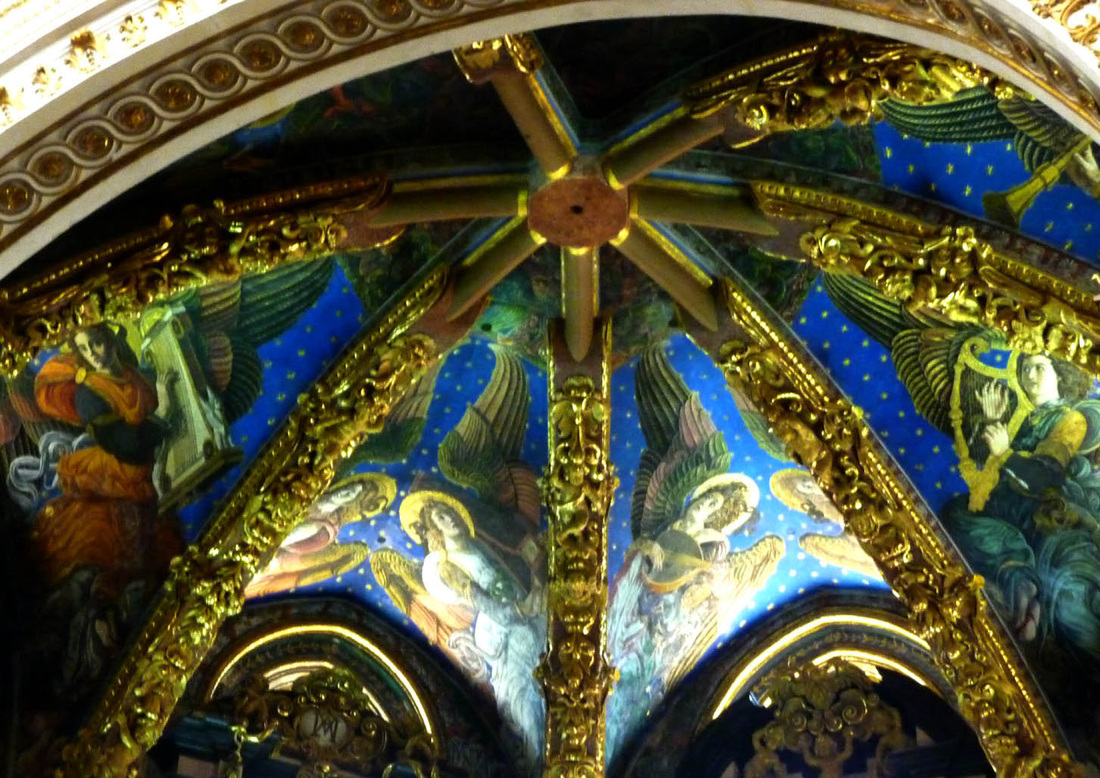
Dome in the Cathedral in Valencia, Spain

1 Timothy 2:1, 8 - I ask that supplications, prayers, petitions, and thanksgivings be offered for everyone ... It is my wish, then, that in every place the men should pray, lifting up holy hands, without anger or argument.
Revelation 5: 11-13 - "I looked again and heard the voices of many angels who surrounded the throne and the living creatures and the elders. They were countless in number, and they cried out in a loud voice: "Worthy is the Lamb that was slain to receive power and riches, wisdom and strength, honor and glory and blessing." Then I heard every creature in heaven and on earth and under the earth and in the sea, everything in the universe, cry out: "To the one who sits on the throne and to the Lamb be blessing and honor, glory and might, forever and ever."
Tobit 12:6 - The Archangel Raphael said, "Thank God! Give Him the praise and the glory. Before all the living, acknowledge the many good things He has done for you, by blessing and extolling His name in song. Before all men, honor and proclaim God's deeds, and do not be slack in praising him."
Praying with Uplifted Hands
The posture of raising our hands in prayer is called the "orans" posture. Like kneeling and praying with hands folded, this posture of prayer goes back to ancient times and has meaning. The ancient Jews and early Church prayed with uplifted hands. Priests still use the orans posture during the Mass. Among the laity, especially in private prayer and prayer outside of Mass, over the last hundred years the charismatic renewal has revived this posture to more frequent use among Catholics and other Christian communities.
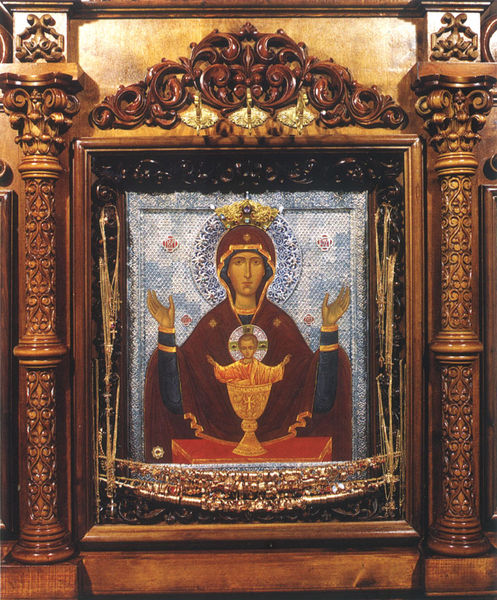
Christian art, especially icons, shows us to use the orans as a way to imitate Mary. The Church teaches Mary is, "the perfect Orans (pray-er), a figure of the Church ... The prayer of the Church is sustained by the prayer of Mary and united with it in hope." - Catechism paragraph 2679.
Below are examples of the orans in an icon, and in images from the catacombs where the early Church celebrated Mass while hiding during the persecutions of the Roman Empire. Let us learn from their example and through the Communion of Saints, unite with them as they worship God in Heaven. Even despite the danger of being put to death for their faith, the early Christians praised God because they loved God more than life itself. Come, let us adore Him!
Revelation 5: 11-13 - "I looked again and heard the voices of many angels who surrounded the throne and the living creatures and the elders. They were countless in number, and they cried out in a loud voice: "Worthy is the Lamb that was slain to receive power and riches, wisdom and strength, honor and glory and blessing." Then I heard every creature in heaven and on earth and under the earth and in the sea, everything in the universe, cry out: "To the one who sits on the throne and to the Lamb be blessing and honor, glory and might, forever and ever."
Tobit 12:6 - The Archangel Raphael said, "Thank God! Give Him the praise and the glory. Before all the living, acknowledge the many good things He has done for you, by blessing and extolling His name in song. Before all men, honor and proclaim God's deeds, and do not be slack in praising him."
Praying with Uplifted Hands
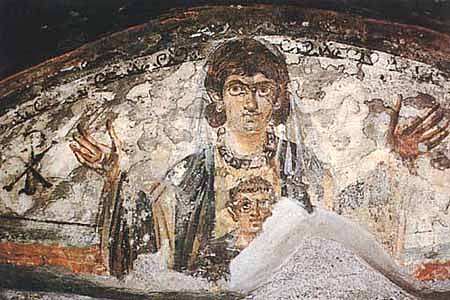
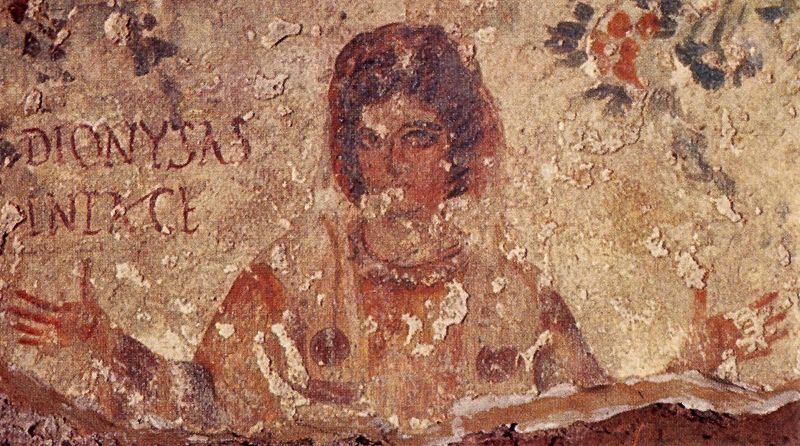
The posture of raising our hands in prayer is called the "orans" posture. Like kneeling and praying with hands folded, this posture of prayer goes back to ancient times and has meaning. The ancient Jews and early Church prayed with uplifted hands. Priests still use the orans posture during the Mass. Among the laity, especially in private prayer and prayer outside of Mass, over the last hundred years the charismatic renewal has revived this posture to more frequent use among Catholics and other Christian communities.
Christian art, especially icons, shows us to use the orans as a way to imitate Mary. The Church teaches Mary is, "the perfect Orans (pray-er), a figure of the Church ... The prayer of the Church is sustained by the prayer of Mary and united with it in hope." - Catechism paragraph 2679.
Below are examples of the orans in an icon, and in images from the catacombs where the early Church celebrated Mass while hiding during the persecutions of the Roman Empire. Let us learn from their example and through the Communion of Saints, unite with them as they worship God in Heaven. Even despite the danger of being put to death for their faith, the early Christians praised God because they loved God more than life itself. Come, let us adore Him!
|
|
A glimpse of Heaven - "A voice coming from the throne said: 'Praise our God, all you his servants, (and) you who revere him, small and great.' Then I heard something like the sound of a great multitude or the sound of rushing water or mighty peals of thunder, as they said: "Alleluia! The Lord has established his reign, (our) God, the almighty. - Revelation 19:5-6
A gift of freedom - Jesus told St. Faustina, "When a soul extols My goodness, Satan trembles before it and flees to the very bottom of hell." - Recorded in St. Faustina's Diary, "Divine Mercy in My Soul," paragraph 378.